White Noise Generator
A free white noise generator you mix yourself. Press play, then shape the sound with ten octave faders. There are no ads, no tracking cookies, and it keeps playing with your screen locked.
How to use this white noise generator
- Press Play.
- Pick a starting point: White, Pink or Brown noise, or a room sound like Box fan or Soft rain.
- Move the faders. The ones on the left control the low rumble and the ones on the right control the high hiss. Level − and + move them all together to make the whole mix quieter or louder.
- Set the sleep timer if you want the sound to fade out, then lock your phone. It keeps playing.
- Tap Save mix to keep it in this browser, or Copy link to send it to someone.
What is white noise?
White noise is a random signal with equal energy at every frequency. It sounds like a steady hiss, similar to an untuned radio. Because it covers the whole audible range, it hides sudden sounds such as traffic, voices or a partner's snoring. That's why people use it for sleep and study, and to settle babies.
Each fader above controls one octave, from 31 Hz rumble to 16 kHz air. With every fader level you hear true white noise. Lower the high bands and it gets warmer and softer. Lower the low bands and it gets thinner and brighter.
White, pink and brown noise: what's the difference?
Noise colors describe how energy changes as the pitch goes up. The slope is measured in decibels per octave.
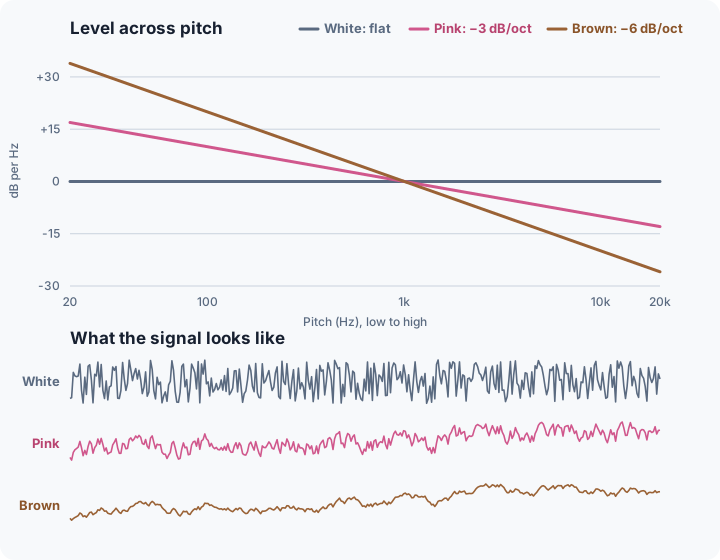
White 0 dB/oct
Equal energy per hertz. It sounds bright and hissy, and it's the classic choice for masking speech.
Pink −3 dB/oct
Equal energy per octave. It sounds balanced, like steady rain, and many people sleep to it.
Brown −6 dB/oct
Deep and rumbly, like a waterfall or a jet cabin. Some people with ADHD use it to help them focus.
Grey equal loudness
Shaped so every pitch sounds equally loud to human ears. People often use it for tinnitus relief.
Blue +3 dB/oct
Brighter than white noise, and good at covering high-pitched sounds.
Violet +6 dB/oct
Very bright and thin. Some people with high-frequency tinnitus find it soothing.
Play it all night with the screen off
Your browser builds the noise as it plays, so there's no track to run out and no ad partway through the night, which can happen with a 10-hour video. Lock your phone and it keeps going. You can pause it from the lock screen.
You may not need it all night, though. The sleep timer stops the sound after 5 minutes to 8 hours, or any number of minutes you type in, and fades it out over the last few minutes. That way it covers the time it takes you to fall asleep and then goes quiet. It remembers your choice for the next night.
On a tablet or laptop that stays on, tap Black screen to turn the page dark while the sound plays. Tap anywhere to bring it back.
Gear that pairs well
Your phone does the job on its own. These help if you listen every night.
-
Sleep headphones
These put flat speakers inside a soft headband, so you can listen lying on your side without waking whoever shares the room.
PRODUCT NAME -
Bedside speaker
Phone speakers barely play the lowest faders. A small speaker by the bed fills in the 31 to 125 Hz bands.
PRODUCT NAME -
Standalone sound machine
If you'd rather keep your phone out of the bedroom, a machine on the nightstand can play all night on its own.
PRODUCT NAME
As an Amazon Associate I earn from qualifying purchases.
Questions
Is white noise good for sleep?
For many people, yes. A steady sound lowers the contrast between silence and sudden noises, so those noises are less likely to wake you. Keep the volume low, around the level of a quiet shower.
Is it OK to sleep with white noise every night?
Plenty of people do, and a quiet, steady sound can cover noises that would otherwise wake you. The research isn't all positive, though. In a 2026 University of Pennsylvania study, 25 adults slept in a lab with pink noise at 50 dB and got about 19 fewer minutes of REM sleep a night. White noise is a similar broadband sound. If you use it, keep it quiet and try the sleep timer so it stops once you're asleep. When outside noise is the problem, earplugs did better in that same study.
Is it safe for babies?
Be careful with volume and distance. A 2014 study in the journal Pediatrics measured 14 infant sleep machines at full volume, and every one was louder than 50 dBA at 30 cm, the recommended noise limit for hospital nurseries. Put your phone or speaker across the room, keep the volume low and use the sleep timer. The lead researcher of the 2026 Penn study also urged caution with broadband noise for newborns and toddlers.
Is a fan white noise or brown noise?
Usually closer to brown or pink noise. Most of a fan's sound is a low and mid-range whoosh, with less of the high hiss that white noise has. The Box fan preset above is shaped that way.
Does it keep playing when I switch tabs or lock my phone?
Yes. Your mix plays like a music track, so it keeps going when you switch apps or lock the screen, and you can pause it from the lock screen. The built-in browser inside some apps may still stop it. If that happens, open this page in Safari or Chrome.
Do I need an app?
No. It runs in Safari, Chrome and other current browsers on phones and computers. On an iPhone, tap Share, then Add to Home Screen, and it opens like an app. Once you've opened it, it keeps working without an internet connection.
What does Drift do?
Drift slowly raises and lowers each band by a few decibels, so the sound moves the way wind or surf does.
Is this free?
Yes. There are no ads and you don't need an account. Your browser generates the sound, so there's nothing to download.